 (713) 360-0850
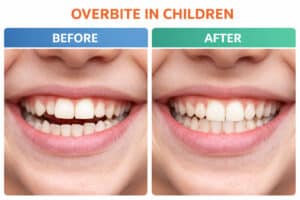
An overbite is a common orthodontic issue in children, but many parents are not sure what it really means or when they should be concerned. In simple terms, an overbite happens when the upper front teeth stick out too far over the lower front teeth. A small overbite is normal, but when it becomes too large, it can affect your child’s smile, bite, comfort, and even long-term oral health.
The good news is that overbites can often be treated successfully, especially when they are found early. At Luna Pediatric Dentistry, we help parents understand what to look for and when it may be time to consider kids orthodontics. Early evaluation can make treatment easier and help protect your child’s growing smile.
Table of Contents
What Is an Overbite?
An overbite describes how the top front teeth sit over the bottom front teeth when the mouth is closed. Most children have some overlap, and that is normal. The problem starts when the overlap is too deep or when the upper teeth stick too far forward.
A larger overbite can sometimes lead to uneven wear on teeth, trouble biting properly, jaw discomfort, or a greater chance of dental injuries. If your child’s front teeth seem to stick out, it is worth having them checked. If you are wondering when children should start getting evaluated, you may also like our article on what age should a child see an orthodontist.
What Causes an Overbite in Children?
There is not always one single cause. In many cases, an overbite happens because of genetics, which means your child may have inherited the way their teeth or jaws grow. In other cases, certain habits or growth patterns can make the problem worse over time.
- Genetics and family history
- Thumb sucking for a long time
- Extended pacifier use
- Tongue thrusting
- Jaw growth differences
- Crowded or poorly positioned teeth
Some children also have other bite issues at the same time, such as crowding or spacing concerns. If you have noticed that your child’s teeth are not coming in evenly, our post on baby teeth spacing issues may also be helpful.
Signs Your Child May Have an Overbite
Some overbites are easy to spot, while others are more subtle. Parents often notice that the top front teeth seem much farther forward than the bottom teeth. In some children, the teeth may look crowded, the lips may not close comfortably, or the bite may seem off when chewing.
- Upper front teeth that stick out noticeably
- Difficulty biting or chewing certain foods
- Teeth that do not line up well
- Jaw discomfort or tiredness
- Speech changes in some cases
- Frequent chipping or trauma to the front teeth
Because front teeth that stick out can be easier to hit during sports or falls, parents should also think about injury prevention. Our article on mouthguards for young athletes shares simple ways to protect your child’s smile during sports and play.
Treatment Options for an Overbite in Children
Treatment depends on your child’s age, how severe the overbite is, and whether the issue is caused mostly by tooth position, jaw growth, or both. In many cases, early orthodontic treatment can guide growth and improve the bite before the problem becomes harder to correct.
Monitoring Growth
If the overbite is mild, your child may only need regular checkups and monitoring. Some bite issues become easier to understand as the adult teeth come in and the jaws continue to grow. Regular visits and early dental care can help us catch changes at the right time.
Early Orthodontic Treatment
For some children, early treatment can help guide jaw growth and improve tooth alignment before all the permanent teeth come in. This may be recommended when an overbite is more noticeable or when it is already causing problems.
If you want to learn more about timing, our article on early orthodontics explains why early care can be helpful for some children.
Braces or Other Orthodontic Appliances
Braces are one of the most common ways to correct an overbite. Some children may also benefit from other orthodontic appliances, depending on how their teeth and jaws are developing. The goal is to create a healthier bite, improve appearance, and reduce the risk of future dental problems.
If your child’s teeth are already showing signs of crowding or alignment issues, our post on signs your child might need braces is another good place to start.
Conclusion
An overbite in children is common, and in many cases, it can be treated very well when it is found at the right time. The most important thing for parents is to pay attention to the way their child’s teeth come together and not ignore signs that the bite looks off. Simple evaluation now can help prevent bigger problems later.
At Luna Pediatric Dentistry, we are here to help families understand their child’s smile and know when orthodontic care may be the right next step. If you have questions about your child’s bite, braces, or early orthodontic treatment, contact our office to schedule a visit.